


Most people think of nationalism in political or cultural terms. They define it simply as citizens making their country their primary focus.
But nationalism has other manifestations. Focusing on the nation can lead to economic policies that prioritize protecting and leveraging national resources. The tariff, for example, is one measure nations use to protect their national resources from the unfair business practices of others.
Within this nationalist worldview, the Iran War is ushering in what some call resource nationalism. It is much more than a round of sanctions or trade adjustments that seek to tweak the system to favor fair trade.
This effort wants to rewrite the book of international trade altogether, and on the fly.
Getting Rid of the Guardrails
The war in Iran has served as a catalyst for undermining the global energy order. While the stated goals of the conflict were different, as everyone knows, the new reality in the Persian Gulf has nevertheless forced nations to abandon decades-old trade networks. Trade agreements, futures markets and pricing structures that guaranteed some degree of global stability in price and supply became unpredictable and unreliable.
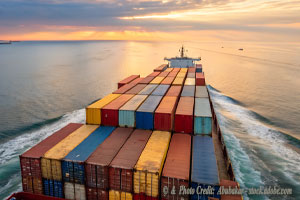
The old guardrails of international trade are disappearing. The Strait of Hormuz blockade disrupted shipments of oil and many other goods, turning much of global commerce upside down. The result is a more volatile and fragmented world economy, where the flow of oil, liquified natural gas, and petroleum products is governed far more by political maneuvering than by economic efficiency.
“It means it’s an every-man-for-himself situation,” said Gregory Brew, a senior analyst on Iran at the Eurasia Group, in an article in the Wall Street Journal.
This scramble will probably go beyond energy, as other critical resources are involved. With resource nationalism, the old rules-based global order will be replaced by… whatever works. Anything goes in the new rules-free economic wilderness.
Complaints and Shortcomings
This major disruption was preceded by widespread discontent. Nationalist and populist parties worldwide have long complained about the very real shortcomings of the liberal rules-based global order.
The rush for comparative advantage over the last sixty years has moved much of the West’s manufacturing base offshore. This upheaval displaced many workers, shattered communities and caused much suffering.
Perhaps the most obvious dragon in the room of the pre-Iran War “rules-based” order is China’s massive industrialization and export economy. This regime used and abused the rules-based order to its great advantage. It broke (and still breaks) many of the rules for international trade and upsets free markets everywhere by flooding them with its subsidized, forced and cheap-labor goods.
These economic shortcomings reflect political nationalism’s claims that people feel the loss of identity as the world becomes more global. Consequently, there is deep resentment toward globally-centralized trade systems that impose rules that hamstring honest players, while allowing the misbehavior of China and other scofflaw regimes to go unpunished for decades.
Many of these problems attributed to the liberal rules-based order are the products of moral problems that corroded social institutions and prepared the way for big government and ever-increasing regulation.
Problems with Resource Nationalism
But the resource nationalism proffered today as a solution for these grievances comes with its own troubles. It seeks to solve problems instantly by handing power to national governments, which will exercise greater control over natural resources within their borders.
Governments then implement policies through taxation, regulation, equity stakes and even the nationalization of foreign companies. These measures often result in higher prices, increased State control and distorted markets. It is not an automatic recipe for prosperity. It is an invitation for the unscrupulous to game the system to their own advantage.
Harming Markets
What makes the abrupt lurch away from current global models so dangerous is that its substitutes are unknown and unvetted. Indeed, the Wild West erratic nature of resource nationalism, where it is every man for himself, does not provide the stability needed for business reliability.
Demolishing the guardrails of rules-based stability without proper replacements being in place leads to volatile actions that ultimately hurt consumers and disrupt markets. Once removed, guardrails are difficult to reestablish.
At the same time, resource nationalism will still allow some nations with higher leverage positions to dictate unfair terms to other nations, especially weaker countries. Even strong nations can be victims of economic might-makes-right impositions. As much as America has tried to punish China for its cheap labor, human rights abuses and closed domestic markets, the communist power still manages to keep flooding American markets with its goods.
The present system is far from perfect and needs reform. However, at least it recognized that markets need set rules, international trade agreements and moral principles applicable to all. Such mechanisms can help nations secure orderly markets through coordinated supply chains and sanction nations that exploit their own people or threaten world peace. Without a moral compass, fair trade becomes impossible, and free trade becomes increasingly anarchical.
International trade reform cannot be done on the fly.
Looking After Self-Interest
Many people praise resource nationalism as a protective measure that uses whatever it takes to put national interests first. Indeed, nations must take care of themselves and preserve their resources. There is nothing wrong with taking reasonable measures.
However, in their pursuit of international trade, nations must consider the general picture. The present scramble to secure resources in an unstable world underscores the reality that the destruction of trade rules can ultimately backfire, working against the interests of all nations.
The present crisis can only be overcome if what is left of the West unites against the forces of chaos and terror that threaten the world. Taking an every-man-for-himself attitude never turns out well. It is a formula for failure.
Photo Credit: © Abubakar – stock.adobe.com
First Published on TFP.org