


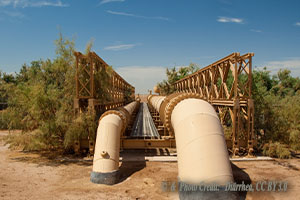
Massachusetts needed more natural gas pipeline capacity ten years ago, and it needs a lot more today. In 2015, Maura Healey helped kill the Algonquin pipeline upgrade that would have provided cheap natural gas to Massachusetts consumers. Today, the state is paying dearly for her folly.
On October 1, 2026, the now-Gov. Healey wrote to U.S. Energy Secretary Chris Wright asking that federal reviews for the expansion of the Algonquin gas pipeline “move without delay,” with “sufficient staff and resources” to keep a 2028 start date.
She warned that any federal delay “could put those consumer benefits at risk.” Her office says the project could save 600,000 customers about $40 million a year, mostly by replacing costly imported liquefied natural gas (LGN) brought in by tanker to Everett, Massachusetts.
Reality has finally arrived in Massachusetts, a decade late and with a massive bill attached.
The Woke Record She Built
In November 2015, then–Attorney General Healey released a study and declared: “We do not need increased gas capacity to meet electric reliability needs.” She claimed that demand needed to be reduced. Her office then took the rare step of suing a state agency to oppose the financing plan for what was called Access Northeast. That project upgraded the same Algonquin system she now wants expanded.
When the Supreme Judicial Court struck down the plan in August 2016, Healey celebrated. She said, pipeline developers “will need to find a source of financing other than electric ratepayers’ wallets.” Within days, Eversource Electric withdrew its contracts.
The Boston Globe later noted while she was not solely responsible for stopping the projects, she claimed the credit for herself. “I stopped two gas pipelines from coming into this state,” she told a 2022 campaign forum. She cannot take the trophy and then disown the damages she inflicted.
What the Victory Bought
The pipeline was stopped, but the demand for gas has only increased in ten years.
In January 2018, during a brutal cold snap, a tanker unloaded at Everett, Massachusetts carrying fuel from Russia’s Yamal plant, owned by a company under U.S. sanctions. It was the first Russian gas the terminal had received in five decades. That same year, Healey’s spokeswoman insisted that LNG was “a more efficient and economical way to meet energy needs” than “high-risk and costly pipelines,” and that “continuing to rely on pipelines is too risky for ratepayers and our climate.”
Today, Massachusetts residents pay about twice the national average for electricity, and about half the region’s power comes from natural gas.
This is how symbolic environmental victories work. The activist claims victory for stopping a pipeline in a headline and the gas still gets burned. It simply arrives by foreign tanker instead of an American pipeline, at a higher price.
Who pays? Not the advocates who celebrated outside the courthouse. The retiree in Fall River on a fixed income pays, turning the thermostat down in January. So does the young family in Worcester whose electric bill now competes with groceries, and the small manufacturer who decides the next expansion will be moved to another state.
A Fraction of a Solution, a Decade Late
At its peak, Access Northeast would have delivered up to 925,000 dekatherms a day. The Reliable Affordable Resilient Enhancement (RARE) project Healey now champions adds a paltry 73,500, 8 percent of the original project. Access Northeast was supposed to be in service by November 2018. Now the governor is pleading for an 8 percent increase by 2028.
This is the self-destructive logic of the woke activism Gov. Healey embraced. It measures success by what it prevents, not by what it provides. It treats a blocked pipeline as a moral achievement, even when the result is dirtier fuel, foreign suppliers and higher bills for her constituents.
Indeed, the facts did not change between 2015 and 2026. New England’s cold winters, its narrow pipeline corridors and its dependence on gas were all there when she wrote that study a decade ago. What changed is that the bills came due and people noticed.
Ten years ago, Healey told pipeline developers to find money elsewhere. The increased fuel cost still found its way into Massachusetts residents’ wallets. Now the woman who boasted of stopping two pipelines is asking the Trump administration to hurry one along. The project’s acronym is RARE, which provides an ironic and bitter parallel.
After a decade of Healey’s woke energy policy, affordable energy in Massachusetts has become exactly that—RARE.
Photo Credit: © Diarrhea, CC BY 3.0
First Published on TFP.org