A birthday party for a communist who created endless bread lines—and a platform that promises the same for America.
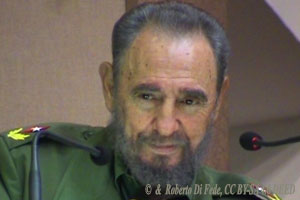
On August 13, 2026, Cubans stood in bread lines amid 20-hour blackouts. That same day, the Democratic Socialists of America (DSA) published a tribute to the man responsible for those bread lines and blackouts.
That statement called Fidel Castro’s centenary birthday a day of “historic significance.” It also hailed the despot as “an organizer, a fighter” and “a stalwart symbol of anti-imperialist struggle.” The DSA demanded reparations from Washington and the prosecution of Secretary of State Marco Rubio for “crimes against humanity.”
The DSA’s International Committee spent months urging chapters to celebrate the centennial. Boston’s chapter hosted a Castro birthday party featuring mojitos, a DJ and a salsa exhibition. Only thirty-seven people showed up.
The DSA is celebrating a man whose atheistic, communist program stole private property, confiscated businesses and suppressed religion in the name of “class struggle.” He brought a once-prosperous nation to its knees under the guise of “fighting for the people.” The statement speaks not only to Castro’s record but also to the DSA program.
What Castro Actually Did and What the DSA Conveniently Omits
Castro’s socialism destroyed the free market in Cuba. He especially targeted small businesses. In March 1968, for example, he announced his “Revolutionary Offensive,” under which he seized roughly 55,000 to 58,000 small businesses—bodegas, butcher shops, barbershops, laundries, cafés and one-and-two-man repair stalls.
Owners were denounced as “parasites” and forced into state jobs. In Castro’s own words: “There would be no future in this nation for private business, the self-employed, private industry or anything.” Consumer goods vanished, productivity collapsed, and sugar, milk, meat, vegetables and poultry became luxuries.1
As a result of this policy and others, Cubans today live in utter poverty and perpetual misery. The average Cuban state salary is about 6,930 pesos a month — roughly $13 to $15 at the street exchange rate. Seven in ten Cubans skip meals daily; blackouts can last up to 20 hours a day; the island has shed roughly 10 percent of its population, with independent demographers estimating the exodus at about 2.75 million people since 2020.
Dissent is punished in Cuba. Prisoners Defenders documented 1,327 political prisoners as of July 2026—artists, journalists, minors and peaceful protesters—alongside credible reports of torture and sexual violence while in custody. 2
The DSA’s Own Words
With this background, it is easy to see why the DSA is celebrating. Its platform is very similar to what Castro did in Cuba. The DSA’s platform, “Workers Deserve More,” states plainly: “We fight for the abolition of capitalism.” Its demands include “social ownership of all major industry and infrastructure,” the nationalization of railroads, utilities, and critical manufacturing and technology companies, and orders to “nationalize and socialize…institutions of monetary policy, insurance, real estate and finance.”
The first draft’s long-term goal is “a fully democratically governed economy where production is determined by human need, rather than profit”—a description that amounts to socialist central planning, sugar-coated. The current national program keeps the core intact: “public ownership of the largest corporations and essential industries.” Even the Chicago Tribune’s editorial board, hardly a right-wing outfit, summarized it in five words: “First step, we abolish capitalism.”3
The DSA promises: “Speaking of bills: you don’t really have them anymore. You have no debt. You don’t need health insurance. You don’t pay a mortgage or have a landlord, because comfortable housing is a human right. Your retirement is publicly funded. Food, education, energy, medicine and transportation aren’t for-profit businesses; they are common goods and utilities.”4
The platform would abolish the Electoral College, eliminate the Senate, and replace the presidency and the Supreme Court with an executive and judiciary “chosen by and subordinate to Congress.” Strip the courts of independence, collapse the separation of powers into a single assembly and hand that assembly ownership of the banks, utilities, farms and media—this is not a new democracy. This is now a Cuban model with an American flag over the door, just waiting to collapse.5
The Centennial They Deserve
The DSA chose the right man to celebrate since he carried out its program faithfully. Castro destroyed capitalism. There are no bodegas left to nationalize nor butcher shops left to seize. No barbershops, no laundries, no cafés, no repair stalls remain. The offensive was total, the victory permanent. Production now barely meets need and yields no profit, exactly as the platform demands.
Thus, the mojitos were fitting. Rum, mint and sugar are used at a party for a man who made sugar an imported luxury in a former sugar-exporting nation. A DJ is employed to celebrate a country that puts musicians in prison. A salsa dance exhibition is staged for thirty-seven people in Boston while 1,327 political prisoners sit rotting in cells. All of this was done to honor a “democratic paradise” where some 2.75 million Cubans voted with rafts, visas, and the Darién Gap. Nobody in that room suffered under the system they were toasting.
Castro’s admirers are always safely upwind of his mandatory misery.
The DSA statement signed off with the call: “Hasta la victoria siempre!” which means “Ever Onward to Victory!” Yes, always, forever onward without arrival. Sixty-seven years into Castro’s Revolution, the only thing that seems to go ever onward is an ever-greater number of blackouts and poverty.
Some might say that the DSA misunderstands Cuba. However, this is not true. Its followers understand Cuba perfectly. They have visited, lobbied, fundraised and promoted Cuba. They looked at the finished product—the empty shelves, the prisons, the decaying infrastructure—and concluded the model was worth exporting because at least everyone is equal. Thus, they clearly indicated the path to socialism as their goal: abolish capitalism, nationalize the industries, subordinate the courts and collapse the Congress into a single assembly.
Their hero is the die-hard communist Castro. It speaks volumes about who the DSA activists are. They honor a tyrant, repeat his slogans and drink to his memory. They are very open about this. The only remaining question is whether Americans take them at their word before they get their chance to live in poverty and stand in line like Cubans.