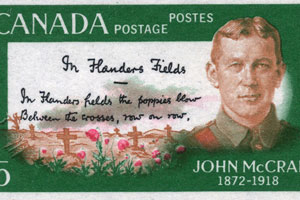
In Flanders fields the poppies blow Between the crosses, row on row That mark our place; and in the sky The larks, still bravely singing, fly Scarce heard amid the guns below.
This is how John McCrae’s famous poem “In Flanders Fields” begins. He wrote this moving piece from the trenches in Flanders, Belgium, as the First World War ravaged the European mainland in 1915.
194,718
Following the German Empire’s brazen invasion of neutral Belgium, the British Empire decided to come to the aid of “Brave Little Belgium.” Over the course of World War I, some 194,718 soldiers from across the British Empire would die to protect a small part of Belgium.
Canadian Lieutenant Colonel John McCrae fought in the Ypres Salient, where 175,000 of the 194,718 British casualties fell. McCrae served as a doctor there. All around him, he saw hundreds, even thousands, die. Countless comrades, his brothers-in-arms, would not survive this bloody war.
He also fought from the trenches. When the German invaders used poison gas against the Allies, he wrote from the Flemish trenches: “For seventeen days and seventeen nights none of us have had our clothes off, nor our boots even, except occasionally. In all that time while I was awake, gunfire and rifle fire never ceased for sixty seconds … And behind it all was the constant background of the sights of the dead, the wounded, the maimed, and a terrible anxiety lest the line should give way.”
We are the dead, short days ago We lived, felt dawn, saw sunset glow, Loved and were loved, and now we lie In Flanders fields.
The Poppies of Flanders
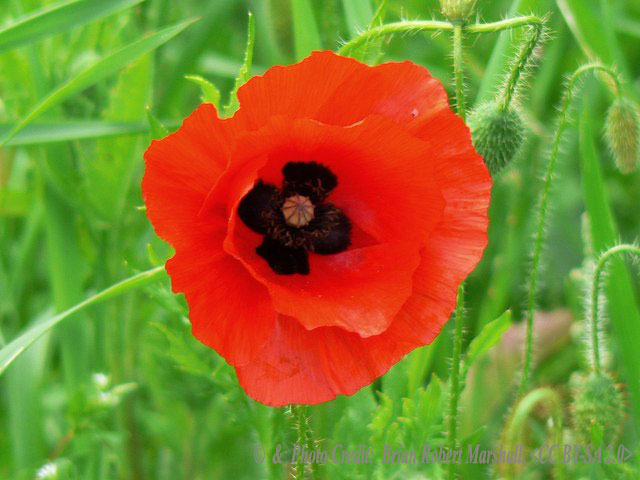
The poem talks about poppies. Due to the back-and-forth fighting and bombings on the battlefield, the entire countryside was turned upside down. All the trees, plants and houses were destroyed. Yet in this barren land, one plant began to grow: the poppy. A poppy seed can lie dormant for years, waiting until all the surrounding vegetation has died. Only then does it sprout and grow.
Thus, the poppy began to bloom on the graves of many fallen soldiers, a fact that proved symbolic. The red petals of the poppy signified the bloodshed of the fallen. In the center of the flower, there is a black cross. It represented the suffering of the fallen soldier, as well as the redemption that follows.
Take up our quarrel with the foe:
To you from failing hands we throw
The torch; be yours to hold it high.
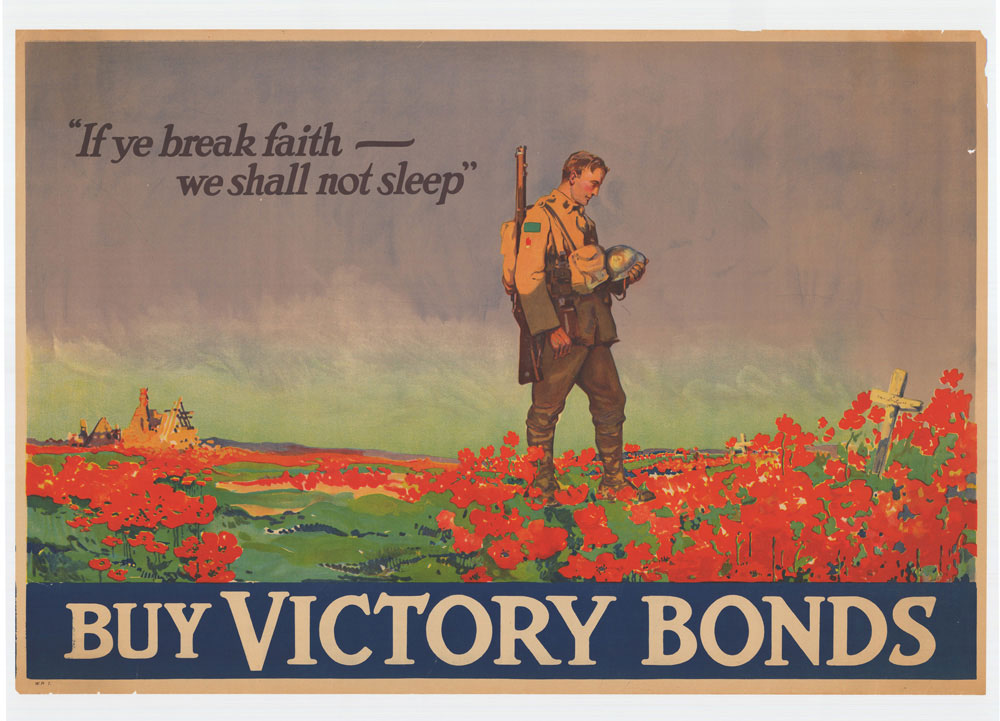
If ye break faith with us who die
We shall not sleep, though poppies grow
In Flanders fields.
We Must Remember Them
John McCrae died of pneumonia in January 1918. He was laid to rest near Ypres. To this day, thousands of tourists visit his grave every year. Even as his body fades away, his poem lives on in the memories of many millions of people.
This Poem Changed the First World War
Today, November 11, marks the commemoration of the end of World War I. The Great War claimed the lives of 15 to 22 million people.
Thus, on this day, prayers should be offered for all those who died in this war, subsequent wars and present conflicts. The occasion should also be used to pray for the soldiers now serving and those Ukrainian brothers who fight a similar battle by heroically defending their country against the Russian invader.
These fallen soldiers must not be forgotten. They must be remembered, lest an ungrateful generation break faith with those who died on Flanders fields.