

Introduction—On July 20, 2026, the U.S. State Department released the report “Cuba—The Capital of 21st Century Communism.” This hundred-page report took a long look at the history of the conflict between the United States and Cuba since Fidel Castro’s 1959 Revolution. In light of its importance, this article is the third of a four-part review of this report. You can find the previous article here.
The State Department’s report, Cuba—The Capital of 21st Century Communism, borrows a reference from a Senate report that described the Venceremos Brigade (VB) as “the most extensive and dangerous infiltration operations ever undertaken by a foreign power against the United States.”
The Venceremos (We Will Win or We Shall Overcome) Brigade (VP) was formed three years after Fidel Castro’s 1966 Tricontinental Conference, as described in the previous installment. As of 2026, it still exists. It has one major purpose: to give young radicals from the United States an opportunity to receive a “political education” in the ways of Cuba’s ongoing revolution. Castro saw an opportunity to personally shape a movement that he hoped would give him ever-greater influence in the United States. Over the more than fifty years of its existence, roughly 10,000 Americans have partaken in this shining example of Cuban “hospitality.”
Training Budding Communists
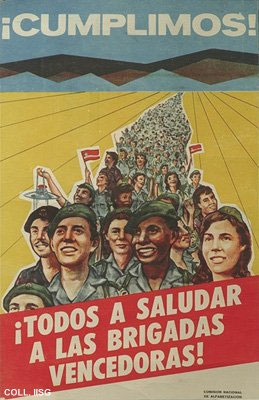
The VB’s founding appears to have been almost accidental. In 1969, Cuba faced a bumper sugar crop without enough laborers to harvest it. A radical American student group, Students for a Democratic Society (SDS), heard of the situation and offered to recruit radical American students to assist. Ironically, as with many of Fidel’s other agricultural interventions, the crop, once harvested, fetched very low prices due to a global sugar glut.
Nonetheless, Castro soon realized that the VB provided Cuba with an incomparable asset—committed laborers and impressionable students. Paying upwards of $2,200 for the experience, every participant was ideologically committed to the Revolutionary cause before traveling to Cuba. Such travel violated U.S. law from 1961 to 2011. Those 10,000 U.S. citizens—some who have since attained leadership positions—willingly participated in this strange camp out/slave labor/indoctrination facility.
“A Model of Anti-Imperialist Direct Action”
In 2022, a VB alumna named Onyesonwu Chatoyer wrote about the experience in an online forum called “Hood Communist.”
“The VB is first and foremost about engaging in a model of anti-imperialist direct action… in resistance to the attempts of the U.S. empire to re-colonize that island nation. As people living in the belly of the beast, participants of the Venceremos Brigade are pushed to develop a clear understanding of our responsibility as U.S. citizens and as organizers in social justice movements to rise up for and defend nations on the front lines of resistance to Western imperialism.”
Of course, nothing in her account indicated Miss Chatoyer’s desire to live in the paradise about which she has so many pleasant memories, even though the bio at the end of the piece identifies her as “an African woman marooned in the United States.”
“Our Own Anti-Imperialist Commitments”
Another former participant (1977) was San Francisco-based freelance writer Diana Block, once a member of an offshoot of the radical Weather Underground called the Prairie Fire Organizing Committee. After attending a kind of VB reunion to commemorate its fiftieth anniversary, she described the VB’s goals in a 2019 piece published in MR (Monthly Review) Online.
“As in the past, the Brigade was… unified in its commitment to three fundamental goals: to end the US blockade of Cuba and all US-imposed travel restrictions; to end the illegal US military occupation of Guantánamo Bay; and to strengthen movements for justice in the US.”
Miss Block then concluded. “For me and many former brigadistas, VB50 was a unique opportunity to celebrate the 60th anniversary of Cuba’s revolutionary project and at the same time reaffirm the continuity of our own anti-imperialist commitments.”
A 1973 participant, Jeff Schatz, learned quite a different lesson. As reported in a 2020 article in The Atlantic, he did construction work during his VB sojourn. In the process, he realized he had a talent for building, enjoyed the work and made it his career. As of the time of the article’s writing, he runs a construction business. His specialty is building luxury homes in Malibu.
Mayor Karen Bass
Perhaps the most famous VB’er in politics currently is someone that Mr. Schatz met during his trip, former Congresswoman and current Los Angeles Mayor Karen Bass. In fact, the Atlantic article was written to explore—and attempt to explain Miss Bass’s participation. At the time, presidential candidate Joe Biden was considering her for the V-P slot, which eventually went to Kamala Harris. This fact sparked much comment in liberal precincts in addition to the Atlantic’s article.
The young Miss Bass’s decision to join the VB began in Alexander Hamilton High School in Los Angeles, where she was part of the Class of 1971. Her high school was thoroughly infected with the Revolutionary spirit that animated many students in the years after the discord of 1968. The Atlantic describes it as “the kind of place where students were always striking or boycotting something.”
Her interest in Cuba was stoked by a Spanish teacher who “talked warmly” about Castro’s Revolution. Her VB trip was during the summer of 1973, and her primary task was building houses. She would return several times through the seventies, but not as part of the VB. The fact-checking site Snopes says she “went on at least fifteen trips to Cuba.”
Years later, as a member of Congress, she would accompany Secretary of State John Kerry to Cuba in 2015. She was also part of President Obama’s 2016 visit there. During the 2016 trip, she posted a picture of herself on the social media site, X. The caption read, “My first visit to Cuba in 1973. Never imagined I would one day return with POTUS (President of the United States).” However much her Cuban experiences benefited her during the Obama Administration, they probably kept her off the Biden ticket in 2020. Her support for the still-hated Castro, including a condolence message to the Cuban people at the time of his death, would probably have lost valuable votes among Cubans in battleground Florida. Her California constituents barely noticed.
Hidden Influence
There is no readily available list of the approximately 10,000 Americans who joined the VB, but the Atlantic article mentions two who have attained some political position. Johnnetta Cole served as president of the historically black Spellman and Bennett Colleges. However, Mrs. Cole’s time in the VB likely contributed to Bill Clinton’s decision not to nominate her as Secretary of Education. Karen Bass’s predecessor as Mayor of Los Angeles, Antonio Villaraigosa, was also a VB member.
In addition to the above-mentioned Johnnetta Cole, Diana Block and Mayors Bass and Villraigosa, Influence Watch listed several “Notable Members” of the VB:
- Julia Bernal, director of the Pueblo Action Alliance, a Native American Environmental Group
- Leslie Cagan, director for David Dinkins’ successful 1989 campaign for New York City mayor
- Fania Davis, founder of Restorative Justice for Oakland Youth and sister of Angela Davis
- Roxanne Dunbar-Ortiz,professor at California State University and author of An Indigenous Peoples’ History of the United States
- Michael Kazin, professor of history at Georgetown University
- Sandra Levinson, executive director of the Center for Cuban Studies
- Karen Nussbaum, director of the U. Department of LaborWomen’s Bureau during the Clinton administration
- Sandy Pollack, former Communist Party-USAnational council member
- Michael Ratner, former president of the National Lawyers Guild
- Susan Rosenberg, a former member of the May 19th Communist Organization (a terrorist group), sentenced to fifty-eight years in prison and pardoned by President Clinton
The lack of a complete list limits the ability to assess the effect that the VB has had on education and politics in the United States. However difficult that influence may be to quantify, it is quite easy to imagine. Over the course of a career, a public high school teacher has the opportunity to directly influence 5,000 to 6,000 lives. College professors touch fewer lives, but tend to have more influence over students. If even half of the VB made careers in either high school or university education, they would easily touch twenty to thirty million lives.
For anyone who wonders how the Democratic Socialists of America gained so much political strength over the last dozen years, the Venceremos Brigade would be a good place to start.
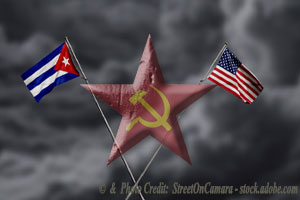
Photo Credit: © StreetOnCamara – stock.adobe.com
First Published on TFP.org