


The global climate apocalypse is not coming; in fact, it never was. Science has spoken, and the official models predicting Earth’s demise have been debunked. The Earth will survive.
The official model used was the Representative Concentration Pathway 8.5 (RCP 8.5), a climate modeling pathway first published in 2014. It was an extremely hypothetical “doomsday scenario” that projected atmospheric CO₂ concentrations above 1,000 parts per million by 2100 and temperature increases of up to 9 degrees Fahrenheit.
The Architecture of Panic
To reach these terrifying numbers, computer modelers programmed RCP 8.5 to assume humanity would embark on a coal-burning frenzy for the rest of the century, consuming more coal than geologists believe exists. It factored in runaway population growth, a complete halt in technological progress and a complete absence of any transition to cleaner energy. It was, essentially, a scenario in which humanity decided to burn every last bit of Earth’s fossil fuels.
Even RCP 8.5’s successors, the updated high-emissions scenarios, rest on bizarre assumptions. One is based on a global population exceeding 14 billion by 2100. Such an unlikely situation stands in stark contrast to the U.N.’s expectation of around 10 billion. Many demographers predict even fewer.
Adjusting for a realistic population alone reduces the projected warming by several degrees. Yet the Pontifical Academy of Sciences never questioned these absurd parameters. RCP 8.5 was rarely labeled a “worst case.” Propagandists dressed in lab coats paraded it as an inevitable reality in study after study. They enshrined it as an atmospheric doctrine.
When Bad Data Meets Dogma
For over a decade, a hidden assumption buried deep within a climate computer model has seared a doomsday vision into the minds of future generations and informed critical policy worldwide. It was a statistical ghost that never materialized, and those who promoted it knew it was unreasonable.
Yet the damage RCP 8.5 inflicted on public trust, economic policy, and—most tragically—a generation of youth who grew up believing the sky was literally falling. During its short lifespan, popes, kings and presidents promoted these very same projections that have tortured the public’s collective psyche and warped policy and media coverage for years.
From pulpits to classrooms, the wise men presented a worst-case scenario as a guaranteed future. A new generation was taught that it was inheriting a disintegrating planet, without ever being informed that humanity had to burn imaginary coal reserves.
Now, the scientists behind the climate mantra have finally conceded what critics have long argued: The most frequently cited climate scenario was fundamentally “implausible.” Facing a mounting wall of incontrovertible scientific evidence, researchers have quietly retired the extreme and dishonest climate scenarios. The international committee overseeing IPCC scenarios has now published its new framework. Thankfully, RCP 8.5 is now banished.
The Human Cost of the Apocalyptic Mirage
Climate researcher Roger Pielke Jr. spent years documenting the misuse of this scenario. He noted that academics published tens of thousands of papers using RCP 8.5 data between 2018 and 2024. These papers triggered an avalanche of media hysteria, political grandstanding and massive regulatory overreach. Governments built vast policies on a mirage, justifying expansions of control over energy and personal choice that would otherwise never have seen the light of day.
But the true cost of this environmental propaganda is human. A landmark 2021 global survey published in The Lancet1 polled 10,000 young people across ten countries. It found that 59 percent were “very or extremely worried” about climate change. More than half regularly felt powerless or guilty. Three-quarters believed the future was inherently frightening.
Worse, one in four Australian children aged 10 to 14 feared the world would end before they grew up. These are not teenagers engaging in abstract philosophical angst; these are ten-year-olds carrying the weight of an existential apocalypse in their backpacks. That is a load that no child should bear.
A Reckoning for the Prophets of Doom
Even though the doomsday model has met its own doom, the anxiety it planted still plagues millions of young minds.
Many in authority need to make restitution to the world and offer a profound apology. The clergy who adopted the left’s agenda without due diligence, the researchers who rode the funding wave fueled by flawed data, the editors who published the terrifying headlines and the educators who taught the projections without citing any doubts—all share the blame.
Science works because it eventually corrects itself. The task may have taken twenty years of stubborn reluctance, but the dishonest and extreme scenarios have finally met a welcome demise. The question now is whether the individuals who wrought this psychological and economic havoc have the honor and integrity to admit loudly and clearly that they were wrong and to tell the truth.
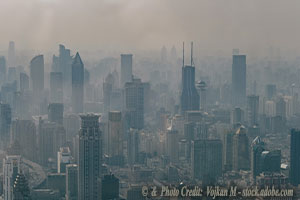
Photo Credit: © Vojkan M – stock.adobe.com
First published on TFP.org.