

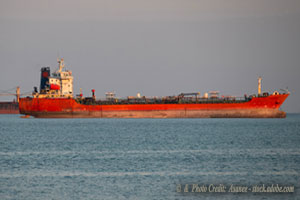
If there is one lesson to be learned from the war in Iran, it is that supply chains are vulnerable and fragile. Certain geographical chokepoints exist that can bring down the world economy.
The Strait of Hormuz suddenly became a concern for everyone. To make matters worse, the modern economy is based on creating these fragile points.
A Massive, but Fragile, Network
In a recent piece in The Washington Post, Mark Gee, a food engineer, discussed the Strait’s importance as a conduit for fertilizer. He made a statement that should make everyone who eats sit up and take notice.
“The modern agriculture system feeds 8 billion people and is astonishingly productive. It is also alarmingly fragile. Decades of optimizing for efficiency have left the world’s food dependent on a small number of routes, companies and inputs.” He then related the dangerous situation in which everyone plays a role. “In 2017, the British think tank Chatham House identified 14 trade chokepoints that handle over half the world’s grain and fertilizers. Nearly all of them have suffered a major disruption since the turn of the century.”
Chokepoints
Most people might well ask, “ What is a chokepoint?” The Chatham House report to which Mr. Gee referred contains a very good working definition: “critical junctures on transport routes through which exceptional volumes of trade pass.”
It explains that three types of chokepoints affect food supply. The first is a set of narrow bodies of water. These include Hormuz, the Panama and Suez Canals, the English Channel near Dover, Gibraltar, the Dardanelles in Turkey, Bab al-Mandab between Saudi Arabia and Africa and Malacca between Indonesia and Thailand. The second are coastal ports on the Gulf Coast of North America, the Black Sea, and the coast of Brazil. Last are transportation networks in the U.S., Brazil and near the Black Sea.
Close off any one of these, and segments of the world food supply freeze in place, just as everyone saw with oil and fertilizer not passing through the Strait of Hormuz.
Chokepoints are not just limited to the food supply. It can apply to goods manufactured in key nations that can interrupt supply chains. The ventilator panic early in the COVID pandemic revealed vulnerability. China was the only supplier, and it was not exporting them due to domestic demand. Only when U.S. companies rapidly designed and produced ventilators was the crisis averted. Another example of a crucial industry would be Taiwan’s dominance in chip manufacturing. Many rightly fear a semiconductor shortage if China invades Taiwan. There are thousands of examples in various industries.
Unnecessary Limitations
Chokepoints exist because economies are maximized for efficiency and lower prices. The tendency is to limit alternatives and go to the most inexpensive sources for materials and transport. Sometimes this means sourcing from the other side of the world rather than developing local resources. In addition, suppliers can corner the market at a low price and later dictate the terms of sale.
Such optimization does not consider disasters and political crises that can paralyze economies and leave markets in the short term, without anyone to pick up the slack.
Unpredictable Supplies
In his book Return to Order, John Horvat addresses this issue.
“These immense networks are fragile because we have made them so necessary and complex. Everyone is totally dependent upon them. Things have become so intertwined, operate so tightly coupled, and move so quickly that there is little margin for error. The slightest maladjustment, natural disaster, human error, or socialist regulation can have dire effects upon the whole. In this way, we have set up a world of vulnerable neuralgic chokepoints that range from geographic straits to oil supply chains to Internet servers to electric grids.
“Moreover, the more complex the systems put in place, the more unpredictable life becomes. The number of unintended consequences is multiplied, and the very technology employed to deal with them becomes inadequate.”
Reducing Choices
The problem with modern economy is that it has created a machine-like system in a human world. There is no room for the unexpected crises that are becoming increasingly more frequent.
The modern economy prides itself on providing a wide variety of choices. However, it has limited the choices of transportation and production networks in the process of maximizing efficiency in a dangerously fragile world.
What is necessary is to reclaim the future by reconsidering economic decisions to include other, more local or accessible options. The world crisis has now forced such measures upon the world. Such options would make economies more human and less machine-like.
God has provided humanity with many options and great creative ability. Creating new paths must be considered. Not everyone needs to follow the herd through the world’s chokepoints.
Photo Credit: © Asanee – stock.adobe.com
First Published on TFP.org